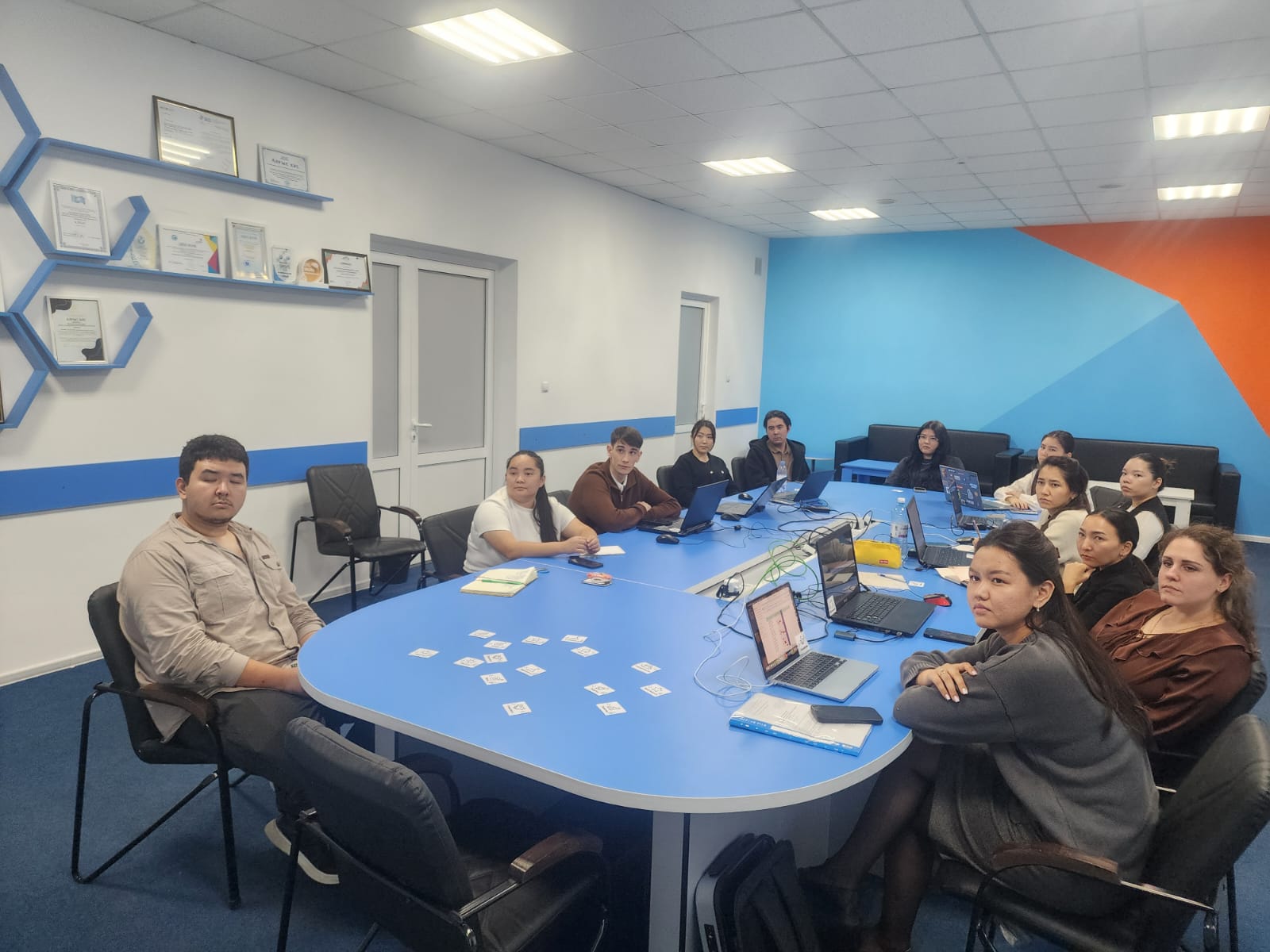
As part of the "Young Educator School" program, the Ust-Kamenogorsk Higher Polytechnic College hosted a practice-oriented seminar focused on the use of IT tools and artificial intelligence in the modern educational environment.
The seminar emphasized hands-on practice: young educators created and tested their own didactic tools in real-time—tools ready for immediate use in the classroom.
Participants explored the capabilities of the following tools:
- ChatGPT — for analyzing open-ended responses and generating or refining instructional materials;
- NotebookLM — for analyzing source materials and preparing lesson content;
- Diffit — for creating differentiated assignments and worksheets;
- ThingLink — for developing interactive diagrams and visual learning aids;
- TURPO AI — for creating 3D visualizations of complex objects and processes.
Special attention was paid to integrating multiple digital tools into a cohesive lesson workflow—moving from visualization and interactive tasks to comprehension checks, feedback collection, and subsequent AI-driven analysis of results.
The seminar speakers were Medet Karymbekuly Manyshev, an instructor of specialized subjects, and Elena Sergeyevna Ekimova, Deputy Director for Academic and Methodological Work.
The event served as a platform for professional exchange and experimentation with modern technologies, helping young educators develop practical skills in the digital design of lessons.
The key outcome was that every participant did more than just get acquainted with the tools; they created a tangible didactic product ready for immediate use in the educational process.
The seminar emphasized hands-on practice: young educators created and tested their own didactic tools in real-time—tools ready for immediate use in the classroom.
Participants explored the capabilities of the following tools:
- ChatGPT — for analyzing open-ended responses and generating or refining instructional materials;
- NotebookLM — for analyzing source materials and preparing lesson content;
- Diffit — for creating differentiated assignments and worksheets;
- ThingLink — for developing interactive diagrams and visual learning aids;
- TURPO AI — for creating 3D visualizations of complex objects and processes.
Special attention was paid to integrating multiple digital tools into a cohesive lesson workflow—moving from visualization and interactive tasks to comprehension checks, feedback collection, and subsequent AI-driven analysis of results.
The seminar speakers were Medet Karymbekuly Manyshev, an instructor of specialized subjects, and Elena Sergeyevna Ekimova, Deputy Director for Academic and Methodological Work.
The event served as a platform for professional exchange and experimentation with modern technologies, helping young educators develop practical skills in the digital design of lessons.
The key outcome was that every participant did more than just get acquainted with the tools; they created a tangible didactic product ready for immediate use in the educational process.